Unlike traditional health benefits that are generally restricted to qualifying medical expenses, a Lifestyle Spending Account allows employers to design a benefit around the needs, interests, and lifestyles of their workforce.
Employers can use an LSA to encourage healthy living, improve employee morale, support work-life balance, reward employees, promote personal development, and enhance their overall compensation and benefits package.
A Lifestyle Spending Account can be designed around virtually any lifestyle benefit the employer wishes to offer, subject to applicable laws, tax rules, and the terms of the employer’s plan.
What Is a Lifestyle Spending Account?
A Lifestyle Spending Account (LSA) is an employer-funded benefit program that reimburses employees for specific expenses designed to improve their lifestyle, well-being, personal development, or quality of life.
The employer determines the purpose of the account and establishes the expenses that qualify for reimbursement under its written plan.
Depending on the employer’s plan design, a Lifestyle Spending Account may reimburse expenses related to:
-
Fitness and physical activity
-
-
Sports and recreational activities
-
-
-
-
-
-
-
-
-
Home and lifestyle expenses
-
Entertainment and cultural activities
-
Community and charitable activities
The employer may choose to offer a broad Lifestyle Spending Account or restrict reimbursement to a narrower set of categories.
For example, an employer may offer a $1,000 annual Lifestyle Spending Account that reimburses employees for gym memberships, fitness equipment, recreational activities, professional development, books, wellness programs, and other expenses specifically permitted under the employer’s plan.
Another employer may offer a much narrower benefit designed exclusively for fitness, wellness, and physical activity.
How Is an LSA Different From an HRA, FSA, or HSA?
Lifestyle Spending Accounts are different from traditional healthcare reimbursement accounts because an LSA is generally designed to reimburse lifestyle expenses that are not necessarily medical expenses.
| Benefit |
Primary Purpose |
| Lifestyle Spending Account (LSA) |
Employer-selected lifestyle, wellness, recreational, personal development, and other benefits |
| Health Reimbursement Arrangement (HRA) |
Reimbursement of eligible medical expenses under applicable IRS rules |
| Health Flexible Spending Account (Health FSA) |
Reimbursement of qualifying medical expenses under Section 125 rules |
| Health Savings Account (HSA) |
Tax-advantaged savings account for qualifying medical expenses available to eligible individuals |
| Dependent Care FSA |
Eligible dependent care expenses under applicable tax rules |
| Employee Assistance Program (EAP) |
Employee assistance and support services, depending on program design |
An LSA provides employers with an opportunity to offer benefits that may fall outside the traditional medical benefits structure.
Important: Lifestyle Spending Accounts are generally taxable employee benefits. Reimbursements may be treated as taxable wages and subject to applicable payroll taxes and reporting requirements. The employer should establish its plan rules and administer reimbursements consistently with applicable tax law.
How Does a Lifestyle Spending Account Work?
A Lifestyle Spending Account can be administered using a straightforward reimbursement model.
Step 1. The Employer Establishes the LSA
The employer adopts a written Lifestyle Spending Account plan and determines how the benefit will operate.
The employer selects:
-
The annual or periodic benefit amount
-
Employee eligibility requirements
-
Eligible reimbursement categories
-
-
Claims submission deadlines
-
Documentation requirements
-
-
-
-
Whether spouses or dependents may participate
-
Whether the benefit is taxable
-
The effective date of the plan
Employers may offer a uniform benefit to all eligible employees or structure benefits based on classifications permitted under their plan and applicable law.
Step 2. Employees Receive Their Lifestyle Benefit
Employees are informed of the amount available under the plan and the categories of expenses eligible for reimbursement.
For example:
Example: $1,200 Annual Lifestyle Spending Account
$1,200 Illustrative annual employer-provided benefit
Monthly equivalent – $100
Eligible expenses – Employer selected
Reimbursement – Upon approved claim
The employer may make the benefit available annually, monthly, quarterly, or on another schedule specified in the plan.
Step 3. Employees Purchase Eligible Products or Services
Employees purchase an eligible product, service, membership, activity, or other benefit using their own funds.
Depending on the plan, eligible expenses may include gym memberships, fitness classes, sports equipment, books, wellness programs, recreational activities, educational programs, or other lifestyle expenses.
Step 4. Employees Submit a Reimbursement Claim
Employees submit a claim for reimbursement according to the plan’s claims procedure.
The claim may require:
-
-
Date of purchase or service
-
Merchant or provider name
-
Description of the expense
-
-
Receipt or other supporting documentation
-
Any additional information required to establish eligibility
Step 5. The Employer or Administrator Reviews the Claim
Claims are reviewed to determine whether:
-
The employee is eligible for benefits
-
The expense falls within an eligible category
-
The expense was incurred during the applicable eligibility period
-
The expense is within the available benefit balance
-
The expense complies with plan limits
-
The claim includes sufficient supporting documentation
Step 6. Approved Claims Are Reimbursed
Once a claim is approved, the employer reimburses the employee according to the plan’s reimbursement procedures.
The employer may establish reimbursement schedules, processing deadlines, payment methods, and administrative procedures.
Lifestyle Spending Account Eligible Expenses
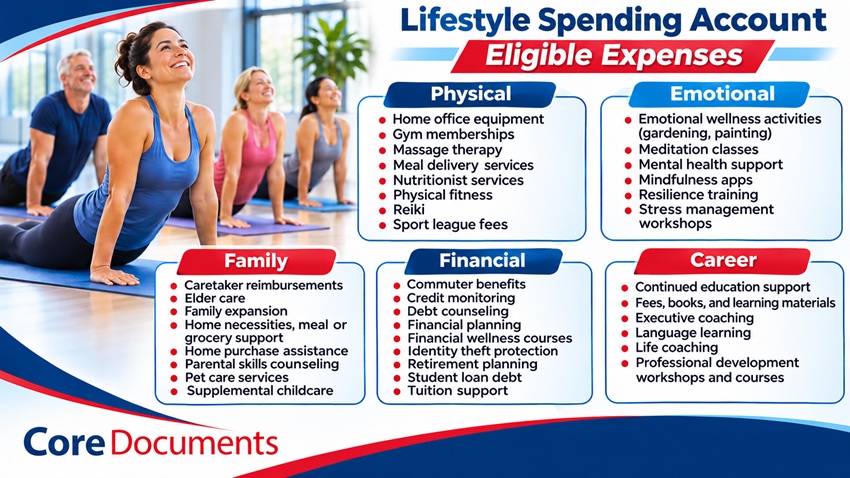
A Flexible List of Lifestyle Benefits Employers May Choose to Offer
One of the most attractive features of a Lifestyle Spending Account is the flexibility to customize the benefit.
The employer may select categories that align with its company culture, employee demographics, recruiting goals, wellness initiatives, and available budget.
The following list provides an extensive framework of potential LSA categories.
Eligible expenses must be specifically authorized by the employer’s written plan.
1. Fitness, Exercise and Physical Activity
Employers may choose to reimburse expenses associated with maintaining physical fitness, exercise, and an active lifestyle.
Potential eligible expenses include:
-
-
Fitness center memberships
-
-
-
Community recreation center memberships
-
-
-
-
-
-
-
-
-
-
-
-
-
-
Strength training programs
-
-
-
Virtual fitness memberships
-
-
-
-
-
-
-
-
-
-
-
-
-
-
-
-
Smart watches, if permitted
-
-
-
2. Sports and Recreational Activities
An employer may choose to promote recreational activities and sports participation.
Potential eligible expenses include:
-
-
-
-
-
-
-
-
-
-
-
-
-
-
-
-
-
-
-
-
-
-
-
-
-
-
-
-
-
-
-
-
-
-
-
-
-
-
-
-
-
-
-
-
-
-
-
-
-
Recreational sports leagues
-
-
-
Recreational competitions
3. Wellness and Healthy Lifestyle Programs
Employers may choose to reimburse activities that encourage healthy lifestyle habits.
Potential eligible expenses include:
-
Wellness program memberships
-
-
-
-
-
-
Healthy lifestyle classes
-
Stress management classes
-
-
-
Guided meditation subscriptions
-
-
-
-
-
Sleep improvement programs
-
-
-
-
-
-
-
Health-related educational programs
-
Lifestyle improvement programs
-
-
Corporate wellness events
-
- Healthy lifestyle competitions

4. Mental Wellness and Stress Management
Employers may choose to support employees’ mental wellness through nonmedical lifestyle benefits.
Potential eligible expenses may include:
-
-
-
Stress reduction programs
-
-
Guided meditation subscriptions
-
-
Stress management workshops
-
-
Personal development workshops
-
-
Emotional wellness education
-
-
-
-
-
-
Nonclinical wellness coaching
The employer should carefully distinguish lifestyle and wellness benefits from medical, clinical, mental health treatment, or other services that may be subject to separate legal or benefit requirements.
5. Nutrition, Food and Healthy Eating
An employer may choose to encourage healthy eating and nutrition-related lifestyle habits.
Potential eligible expenses include:
-
-
-
-
Healthy cooking workshops
-
-
Meal planning subscriptions
-
-
-
Nonmedical nutrition education
-
Healthy recipe subscriptions
-
-
-
Healthy lifestyle food programs
-
Organic food purchases, if expressly permitted
-
Healthy food purchases, if expressly permitted
-
Meal preparation equipment
-
-
-
-
-
-
-
Meal preparation containers
Employers may impose restrictions on food purchases and other expenses to limit the scope of the benefit.
6. Personal Development and Self-Improvement
LSAs can be used to promote personal growth and development.
Potential eligible expenses include:
-
Personal development courses
-
Self-improvement programs
-
-
-
-
-
-
Confidence-building programs
-
-
-
-
-
Professional development books
-
-
Personal development audiobooks
-
-
Educational subscriptions
-
Personal development workshops
-
Skill development programs
-
-
-
-
-
-
-
-
Language learning programs
7. Education and Learning
Employers may elect to include educational and learning expenses that are not otherwise covered by another employer benefit.
Potential eligible expenses include:
-
-
Educational subscriptions
-
Continuing education programs
-
-
-
-
Nondegree educational programs
-
-
-
-
-
-
-
Foreign language instruction
-
-
-
-
-
-
-
-
-
-
-
-
8. Financial Wellness
Employers may choose to encourage employees to improve their financial knowledge and financial well-being.
Potential eligible expenses include:
-
Financial education programs
-
-
Financial literacy programs
-
-
-
Debt management education
-
-
-
Financial planning education
-
-
-
-
Financial wellness seminars
-
Financial education subscriptions
-
-
Financial planning workshops
Employers should carefully review whether particular expenses constitute education versus individualized financial, investment, legal, or tax services.
9. Family, Parenting and Caregiving Support
Employers may elect to offer lifestyle benefits supporting family life and caregiving.
Potential eligible expenses include:
-
-
-
Family education programs
-
Family wellness activities
-
Family recreational activities
-
Child development classes
-
Educational activities for children
-
Family counseling education programs, where permitted
-
-
-
-
Family organization programs
-
-
-
-
Family recreation programs
-
-
-
Family travel programs, if permitted
-
Family events and experiences
Depending on plan design, employers may limit reimbursement to expenses incurred by the employee or extend certain benefits to spouses, dependents, or other eligible family members.
10. Childcare, Children’s Activities and Youth Development
Employers may elect to include certain childcare-related, developmental, educational, and recreational expenses.
Potential eligible expenses include:
-
Children’s sports programs
-
Children’s recreational programs
-
-
-
-
-
-
-
-
-
-
-
-
-
-
-
-
Children’s enrichment activities
-
Children’s educational subscriptions
-
-
-
-
Youth development programs
-
-
-
Employers should distinguish LSA benefits from dependent care benefits governed by separate tax rules and benefit plan requirements.
11. Travel, Vacation and Recreation
An employer may choose to offer recreational benefits that help employees enjoy time away from work.
Potential eligible expenses include:
-
-
-
-
-
-
-
-
-
-
-
-
-
-
Botanical garden admissions
-
Cultural attraction admissions
-
-
-
-
-
-
-
-
Recreational travel experiences
-
-
-
-
-
-
-
Outdoor recreation equipment rental
-
-
-
-
Employers may choose to restrict reimbursement to recreational activities rather than general travel costs.
12. Outdoor Activities and Nature
Potential eligible expenses include:
-
-
-
-
Outdoor recreational equipment
-
-
-
-
-
-
Outdoor cooking equipment
-
-
Fishing licenses, if permitted
-
Hunting-related recreational expenses, if permitted
-
Outdoor adventure activities
-
-
-
Outdoor photography equipment
-
-
-
-
-
Recreational trail memberships
-
-
Nature education programs
13. Technology and Personal Productivity
An employer may elect to support technology and productivity expenses.
Potential eligible expenses include:
-
-
-
-
-
-
-
-
-
-
-
-
-
-
-
Productivity applications
-
-
-
-
Personal organization applications
-
Time management applications
-
-
Digital learning subscriptions
-
-
-
Smart home devices, if permitted
The employer may establish limits on hardware, subscriptions, and individual expense categories.
14. Home, Comfort and Lifestyle
LSAs may be customized to support employees’ quality of life outside the workplace.
Potential eligible expenses include:
-
-
-
-
-
-
-
-
-
Home organization products
-
-
-
-
-
Household wellness equipment
-
-
Personal lifestyle products
-
-
-
Home improvement activities, if expressly permitted
15. Beauty, Grooming and Personal Care
Depending on the employer’s chosen benefit design, an LSA may include personal care and grooming expenses.
Potential eligible expenses include:
-
-
-
-
-
-
-
-
-
Personal grooming services
-
-
-
-
-
Personal care subscriptions
-
-
-
Nonmedical massage services
-
Employers may establish specific limitations on cosmetic, beauty, personal care, or spa expenses.
16. Cultural, Entertainment and Social Activities
Employers may elect to support employees’ cultural enrichment and recreational activities.
Potential eligible expenses include:
-
-
-
-
-
-
-
-
-
-
-
-
-
Entertainment subscriptions
-
-
-
-
-
-
-
-
-
Educational cultural activities
17. Community, Volunteering and Charitable Activities
Potential eligible expenses include:
-
Volunteer participation programs
-
Volunteer-related activities
-
Community involvement programs
-
-
-
Charitable event participation
-
Fundraising event participation fees
-
-
Community service programs
-
Civic engagement programs
-
-
Nonprofit educational programs
Employers should specify whether donations, charitable contributions, fundraising purchases, and volunteer expenses are eligible.
18. Pet and Animal Wellness
Employers may choose to include pet-related lifestyle benefits.
Potential eligible expenses include:
-
-
-
-
-
Pet recreational activities
-
-
-
-
-
-
-
-
-
-
-
Pet-related educational programs
Employers may choose to limit the benefit to wellness and recreational expenses and exclude veterinary treatment or other medical expenses.
19. Transportation and Commuting Lifestyle Benefits
LSAs may be designed to provide certain transportation-related benefits, depending on the employer’s plan.
Potential eligible expenses include:
-
-
-
-
-
Recreational cycling memberships
-
-
-
Recreational transportation activities
-
Transportation-related lifestyle programs
-
Mobility-related recreational equipment
Employers should distinguish LSA reimbursement from qualified transportation benefits that are subject to separate tax rules.
20. Additional Employer-Selected Lifestyle Benefits
The employer may also elect to include additional categories such as:
-
-
-
-
-
-
-
-
-
-
-
-
-
-
-
-
-
Recreational subscriptions
-
-
-
Personal enrichment activities
-
-
-
-
Employee-selected lifestyle experiences
The plan may be structured to include only the expenses specifically approved by the employer.
Lifestyle Spending Account Claims and Reimbursement Procedure

How Employees Request Reimbursement From Their LSA
A Lifestyle Spending Account generally operates through a reimbursement procedure under which employees incur an eligible expense, submit a claim, and receive reimbursement after the claim has been reviewed and approved.
The employer should establish a written claims procedure that explains how claims are submitted, what documentation is required, how claims are reviewed, how reimbursements are issued, and how employees may appeal denied claims.
Step 1: Employee Incurs an Eligible Expense
The employee must incur an expense that is permitted under the employer’s Lifestyle Spending Account plan.
The expense must:
-
Fall within an eligible category selected by the employer
-
Be incurred during the applicable eligibility period
-
Comply with any expense limits
-
Be incurred by an individual authorized under the plan
-
Be supported by appropriate documentation
The employee is responsible for determining whether the expense is eligible before submitting a claim.
Step 2: Employee Submits a Reimbursement Claim
Employees submit claims using the method established by the employer.
The employer may permit claims to be submitted through:
-
-
An electronic reimbursement system
-
-
A designated claims administrator
-
-
Another method designated by the employer
The claim should include sufficient information to identify the expense and establish that it qualifies under the plan.
Required Claim Information
A Lifestyle Spending Account reimbursement claim may require:
-
-
Employee identification number, if applicable
-
Date the expense was incurred
-
Name of merchant, service provider, or vendor
-
Description of the product, service, or activity
-
-
Amount of reimbursement requested
-
Applicable expense category
-
Receipt or proof of payment
-
Additional documentation requested by the employer or administrator
Step 3: Supporting Documentation Is Submitted
The employee must provide documentation sufficient to substantiate the expense.
Examples of acceptable documentation may include:
-
-
-
-
-
-
-
-
Service provider statements
-
-
Other documentation reasonably requested by the employer
Documentation should generally identify the vendor, transaction date, amount paid, and the goods or services purchased.
The employer may require additional information when the documentation does not clearly establish the nature or eligibility of the expense.
Step 4: Claims Are Reviewed
The employer or designated administrator reviews the claim to determine whether reimbursement is permitted.
The review may include determining whether:
-
The employee is eligible to participate in the LSA.
-
The expense was incurred during the applicable benefit period.
-
The expense is included within an eligible category.
-
The expense is permitted under the employer’s plan.
-
The amount requested does not exceed the available benefit balance.
-
The expense does not exceed an applicable category limit.
-
The claim is accompanied by sufficient documentation.
-
The claim was submitted within the required deadline.
-
The expense has not previously been reimbursed.
-
The expense complies with any other plan requirements.
Step 5: Claims Are Approved or Denied
Approved Claims
Claims that satisfy the plan requirements may be approved for reimbursement.
The approved reimbursement amount will be limited to the eligible expense amount and the employee’s remaining available benefit balance.
Denied Claims
Claims may be denied for reasons including:
-
The expense is not an eligible expense.
-
The expense is outside an eligible category.
-
The employee is not eligible to participate.
-
The expense was incurred outside the permitted period.
-
The claim was submitted after the deadline.
-
The expense exceeds the available balance.
-
The expense exceeds an applicable category limit.
-
Required documentation was not submitted.
-
The expense was previously reimbursed.
-
The expense otherwise violates the terms of the plan.
When a claim is denied, the employee should receive an explanation of the reason for the denial and information regarding any available review or appeal procedure established by the employer.
Step 6: Reimbursement Is Issued
Approved claims are reimbursed in accordance with the employer’s established reimbursement schedule.
Reimbursement may be provided through:
-
-
-
-
Another employer-approved payment method
The employer should establish reimbursement processing schedules and communicate them to employees.
Step 7: Employees May Request Review of Denied Claims
The employer may establish an internal claim review or appeal procedure allowing employees to request reconsideration of denied claims.
An appeal may require the employee to submit:
-
-
-
An explanation of why the employee believes the claim should be approved
-
Additional receipts or supporting documentation
-
Other information necessary for review
The employer or designated reviewer will evaluate the appeal under the plan’s established procedures and provide a determination.
Lifestyle Spending Account Claims Process
1. Purchase – Employee incurs expense
2. Submit – Receipt & claim
3. Review – Eligibility & substantiation
4. Approval – Claim approved or denied
5. Reimbursement – Approved expense reimbursed to employee
Lifestyle Spending Account Exclusions
The employer may expressly exclude expenses that are not included within its chosen benefit design.
Depending on the plan, excluded expenses may include:
-
Expenses not listed as eligible
-
Expenses incurred before the effective date
-
Expenses incurred after employment terminates
-
Expenses incurred after the benefit period ends
-
Expenses exceeding the employee’s benefit balance
-
Expenses exceeding applicable category limits
-
Expenses previously reimbursed
-
Expenses lacking required documentation
-
Personal purchases not included in the plan
-
Medical expenses reimbursable under another plan
-
Expenses reimbursed through another employer benefit
-
Expenses paid by insurance or another reimbursement program
-
-
-
-
General-purpose prepaid cards
-
Purchases for individuals not permitted under the plan
-
Expenses not actually incurred by the employee
-
Expenses expressly excluded by the employer
The employer may adopt a more restrictive list of exclusions based on its objectives, budget, and preferred benefit structure.
How Employers Can Customize a Lifestyle Spending Account
One of the major advantages of a Lifestyle Spending Account is that the employer can determine how the benefit is structured.
1. Choose the Annual Benefit Amount
An employer may establish the amount of lifestyle benefits available to employees.
Examples:
| Annual Employer Benefit |
Monthly Equivalent |
| $300 |
$25 |
| $600 |
$50 |
| $1,200 |
$100 |
| $1,500 |
$125 |
| $2,400 |
$200 |
| $3,000 |
$250 |
The employer may choose an amount that aligns with its compensation budget and employee benefit strategy.
2. Choose Eligible Expense Categories
The employer may offer:
-
A broad lifestyle benefit
-
Fitness and wellness only
-
Education and development only
-
Family and recreation benefits
-
Financial wellness benefits
-
-
Technology and productivity
-
A combination of categories
The employer may also establish individual limits within categories.
For example, a $1,200 LSA may include:
| Category |
Annual Maximum |
| Fitness and wellness |
$400 |
| Education and personal development |
$300 |
| Recreation and activities |
$300 |
| Technology and productivity |
$200 |
| Total |
$1,200 |
3. Establish Benefit Periods
The employer may choose whether benefits are provided:
-
-
-
-
-
At another defined interval
The plan should clearly state when the benefit becomes available and when expenses must be incurred.
4. Establish Carryover Rules
The employer may determine whether unused benefit amounts:
-
Expire at the end of the benefit period
-
Carry over to a future period
-
Carry over subject to a maximum
-
Are forfeited upon termination
-
Are subject to other clearly defined rules
Carryover provisions should be stated in the plan document.
5. Establish Employee Eligibility
The employer may define eligible employee classes and establish eligibility requirements consistent with applicable law.
Eligibility provisions may address:
6. Establish Reimbursement Rules
The employer may determine:
-
-
Documentation requirements
-
-
-
-
-
-
Administrative responsibilities
7. Establish Tax and Payroll Treatment
The employer should clearly identify the intended tax treatment of the LSA.
Lifestyle Spending Account benefits are generally taxable compensation when the reimbursement is not excluded from income under applicable law. Employers should account for taxable reimbursements through payroll and applicable reporting procedures.
The employer should establish its plan and administrative procedures with appropriate consideration of applicable federal, state, and local laws.
Why Employers Offer Lifestyle Spending Accounts

Create a Lifestyle Benefit Designed Around Your Employees
A Lifestyle Spending Account allows employers to go beyond traditional employee benefits and create a program that supports the interests, goals, and lifestyles of their workforce.
Whether your company wants to promote fitness and wellness, encourage personal development, support family activities, reward employees, or provide a flexible lifestyle benefit, an LSA gives your organization the ability to design a program that fits your needs.
With Core Documents, employers can establish a customized Lifestyle Spending Account with written plan provisions addressing the benefit amount, eligible expenses, employee eligibility, reimbursement procedures, claims administration, limitations, and other important plan provisions.
Your Lifestyle Spending Account Can Be Customized To Include:
-
-
Wellness and healthy living
-
Sports and recreational activities
-
Mental wellness and stress management
-
Nutrition and healthy eating
-
-
-
-
Family and parenting activities
-
-
-
-
Technology and productivity
-
-
-
Cultural and entertainment activities
-
-
-
Other employer-selected lifestyle benefits
Build Your Company’s Lifestyle Spending Account
 A flexible employee benefit that allows employers to define their lifestyle benefits, establish reimbursement rules, and provide employees with a customized program designed around their company’s goals.
Core Documents Lifestyle Spending Account Plan
Customized plan document • Employer-selected benefits • Defined reimbursement procedures • Written plan provisions