Home / Blog / Section 105 HRA Court Cases - Outcome and Legal Principles Established
Section 105 HRA Court Cases – Outcome and Legal Principles Established
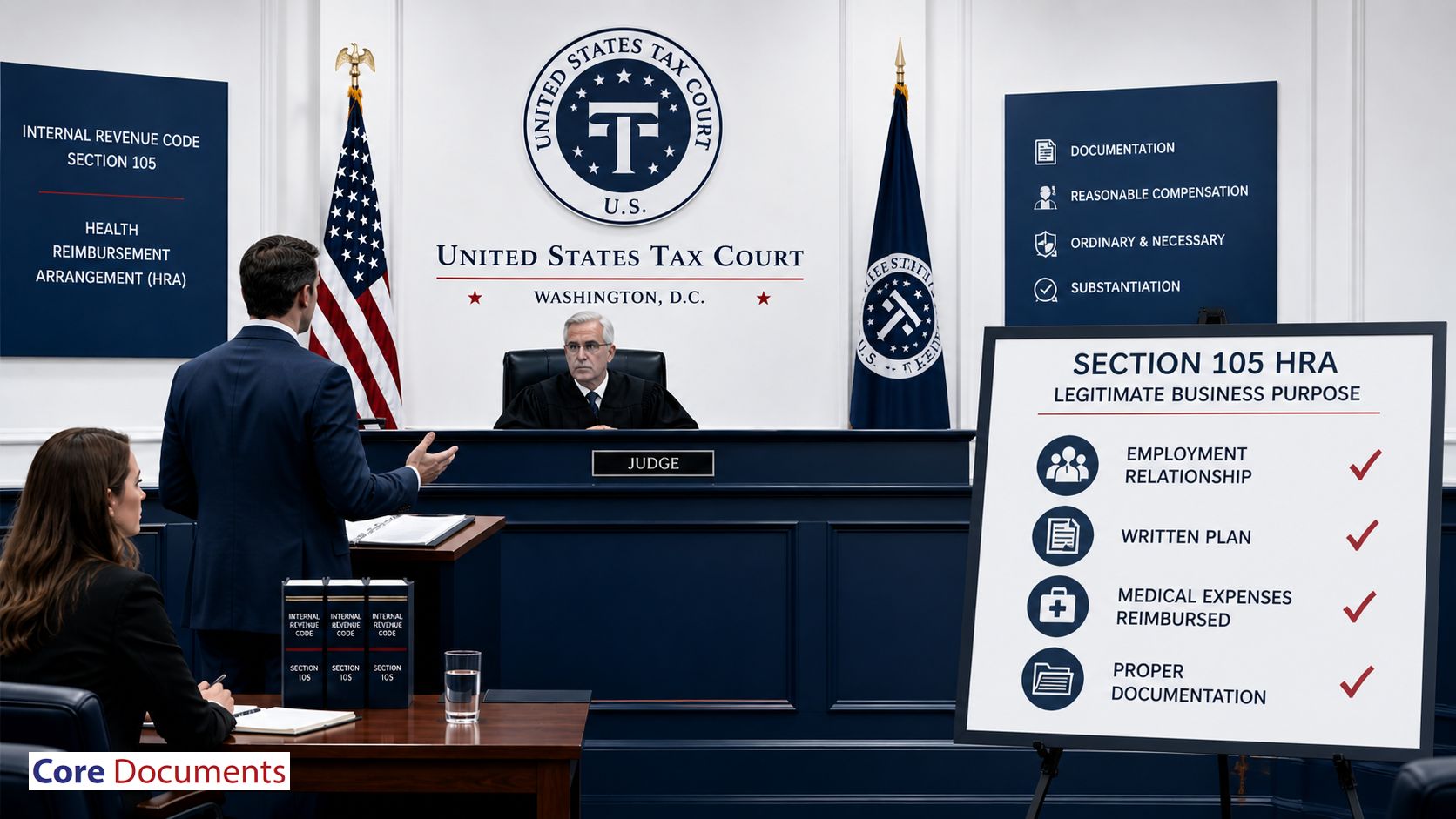
Section 105 Court Cases: Here are the most relevant U.S. Tax Court and appellate cases involving Section 105 HRAs / Medical Reimbursement Plans (especially the classic “employee-spouse” strategy). I’ll break the Section 105 HRA Court Cases down into key cases, outcomes, and practical takeaways—this is what practitioners actually rely on.
Disclosure: None of these Section 105 HRA Court Cases involved any Core Documents’ Section 105 HRA clients.
Key Section 105 HRA Court Cases
1. Speltz v. Commissioner (T.C. Summary Opinion 2006-25)
Outcome: Taxpayer WON
Facts
- Sole proprietor (daycare) employed her husband
- Husband’s only compensation = Section 105 reimbursements
- IRS challenged legitimacy of:
-
- Employment relationship
- “Ordinary and necessary” expense
- Reasonableness of compensation
Court Holding
- The court upheld the Section 105 plan
- Confirmed:
-
- A spouse can be a legitimate employee
- Medical reimbursements can be valid compensation
- Proper documentation is critical
Why it matters
- This is one of the strongest pro-taxpayer cases validating Section 105 spouse strategies
- Section 105 HRA Court Cases
2. Shellito v. Commissioner (10th Cir. & Tax Court remand)
Outcome: Taxpayer WON (after appeal)
Facts
- Farmer used a Section 105 plan to deduct family medical expenses
- IRS disallowed the deductions
Court History
- Tax Court initially ruled against taxpayer
- 10th Circuit reversed and remanded
- Tax Court ultimately ruled for taxpayer
Key Takeaways
-
- Properly structured Section 105 plans create valid business deductions
- Following plan formalities is essential
Why it matters
- Considered a landmark case supporting Section 105 deduction strategies
- Section 105 HRA Court Cases
3. Albers v. Commissioner
Outcome: Taxpayer LOST
Facts
- Taxpayer attempted Section 105 reimbursements through spouse
- Claimed ~$8,200 in deductions
Court Issue
-
- Weak documentation
- Lack of proper plan structure
Court Holding
- Entire deduction disallowed
Why it matters
- Shows that technical mistakes kill Section 105 plans
- IRS wins when:
-
- No formal plan
- No real employment relationship
- Sloppy records
4. Knowles (Tax Court case – “sloppy plan survives partially”) in Section 105 HRA Court Cases
Outcome: Partial win/loss
Facts
- Section 105 plan existed but had defects
Result
- Some elements upheld, others denied
Why it matters
-
- Courts may salvage parts of a plan
- But improper structure reduces benefits
5. Unnamed “Who Paid the Bills” Case (Tax Court)
Outcome: Taxpayer LOST
Key Issue
-
- Who actually paid medical expenses
- Proper reimbursement flow
Court Holding
Why it matters
-
- Audit trail is critical
- Reimbursements must be clearly documented
- Section 105 HRA Court Cases
6. “Lack of Time Sheets” in Cases
Outcome: Taxpayer LOST
Key Issue
- No proof spouse actually worked
Court Holding
- No legitimate employee → no Section 105 plan
Why it matters
-
- Real work performed
- Reasonable duties
- Time tracking
Core Legal Principles Established by These Cases
Across all Section 105 litigation, courts consistently focus on substance over form:
1. Legitimate Employment Relationship
- Spouse must be a real employee
- Must perform actual work
- Compensation must be reasonable
2. Written Plan Requirement
- Formal written Section 105 plan is mandatory
- Must define:
-
- Benefits
- Limits
- Eligibility
3. Proper Reimbursement Mechanics
-
- Reimburse AFTER expenses are incurred
- Keep receipts and substantiation
- No “cash-out” option allowed (or plan becomes taxable)
4. Documentation Wins Section 105 HRA Court Cases
Winning cases (like Speltz and Shellito) had:
- Written plan documents
- Employment agreements
- Clean accounting separation
- Proof of services
Losing cases lacked these.
5. “Ordinary and Necessary” Standard
- Reimbursements must qualify as:
-
- Legitimate business expenses
- Courts often accept medical reimbursements as compensation if structured properly
Section 105 HRA Court Case sources:
Tax Reduction Letter – Section 105 medical plan
Section 105 Plans: A Tax-Smart Spousal Strategy — Fulling Management & Accounting
Section 105 One-Person HRA from $199 one-time fee Core Documents
16 Tax-Free Employee Benefits Explained in 16 Minutes – Video | Core Documents